
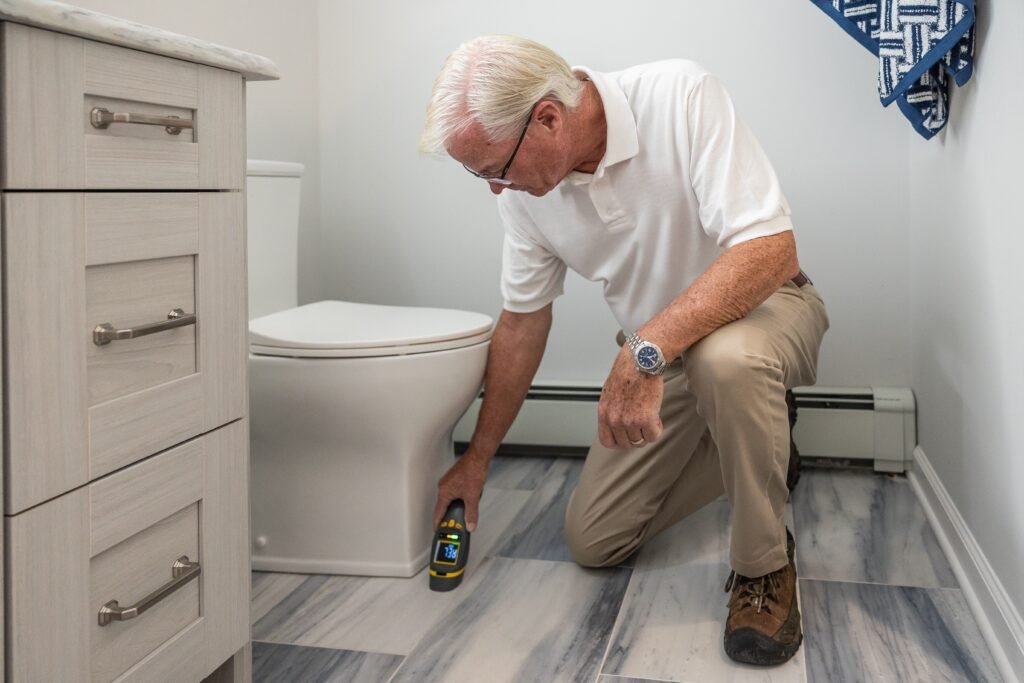
Finding a plumber for a slab leak is not the same as finding a plumber for a dripping tap. A slab leak is hidden under concrete, detection comes before repair, and the wrong first step can mean unnecessary demolition or a repair that misses the real leak. Before you call anyone, check three things: does this company specialise in slab leak detection, not just general plumbing? Will it locate the leak before it opens anything? And will it give you a written, itemised estimate you can compare? This guide gives you a checklist you can use on the first call, questions that reveal weak providers, and red flags to walk away from.
Start by deciding: emergency, or routine?
Your first decision changes how much vetting you can do. Use this triage:
| Situation | What to do |
|---|---|
| Water actively pooling, floor rapidly wet, or water spreading | Shut off the main water supply if it is safe to do so, and call promptly. Use the short emergency checklist below, not the full vetting process |
| Signs present, but no active pooling: higher bill, warm or damp spot, running water sound | You have time to vet properly. Use the full checklist, compare two or three providers, and do not let urgency be used as a sales tactic |
| You are unsure whether it is a slab leak at all | Start with detection, not repair. A provider that jumps straight to repair without detection is skipping the most important step |
For an emergency, use this short version: confirm the company handles slab leaks, confirm it can attend, confirm it will detect before it opens concrete, and confirm you will get a written estimate before repair work starts. For a routine case, work through the full checklist below. Speed matters in an emergency, but it does not excuse blind demolition.
The vetting checklist: what to check before you agree
Use this checklist on the first call, and note the answers. A provider that answers clearly, in plain language, is already ahead of one that answers in generalities.
- Slab leak specialisation. Ask: How often do you handle slab leaks, as opposed to general plumbing? What detection methods do you use? A slab leak repair specialist should be able to name its methods, such as acoustic listening, thermal imaging for hot water leaks, pressure testing, and camera inspection for drain lines, and explain which method fits which kind of leak.
- Detection before repair. Ask: Will you locate the leak before any concrete is opened, and how accurate is that location? A good answer explains the detection steps in order, and what happens if detection is inconclusive. A weak answer jumps straight to repair options, or promises an exact location without any testing.
- Licensing and insurance. Ask: Are you licensed, and are you insured for this kind of work? Note the answer, and check it where a public lookup is available for your area. Licensing and insurance do not guarantee skill, but their absence is a serious warning.
- Written, itemised estimate. Ask: Will I get a written estimate that separates detection, repair, and restoration, and shows what is included and what is excluded? An estimate that lumps everything into one number, with no breakdown, cannot be compared with another quote, and cannot be checked later if the bill changes.
- What the detection report will show. Ask: What will the written report contain? A useful report should show the believed leak location, the tests used, the readings or images that support that location, and the repair options that follow from it. If there will be no written report, only a verbal opinion, ask why, and consider whether that is enough for a job that involves opening concrete.
- Repair options, with trade offs. Ask: What repair options are available for my situation, and what are the trade offs of each? Options may include direct spot repair, rerouting a line around the slab, or, in some cases, lining or repiping, depending on pipe age and condition. A good provider explains disruption, floor restoration, and repeat leak risk for each option, rather than pushing a single option for every home.
- Restoration: who does it, and what is included?Ask: After repair, who restores the concrete, flooring, and finishes, and is that included in the estimate or separate? Many disputes come from restoration, not from the pipe repair itself, because the homeowner assumed it was included and the provider assumed it was not.
- Warranty and follow up. Ask: What warranty covers the labour and the parts, for how long, and what does it exclude? Ask what happens if the same line leaks again nearby, or if a new leak appears on an old line. Get the warranty in writing, not as a verbal assurance.
- Reviews that match the job. Read reviews, but read them for the job you need. Look for recent reviews that mention slab leak detection and repair specifically, not just general praise. Look for comments about diagnosis accuracy, whether the final bill matched the estimate, whether the crew arrived when promised, and whether the site was left clean. A pattern of missed appointments or surprise add ons in recent reviews matters more than an old five star average.
- Local fit. Ask: Do you regularly work in homes like mine, on slab foundations, in this area? Listen for local knowledge: soil conditions, common pipe materials in homes of a certain age, and how detection differs for supply versus drain leaks. A provider that cannot describe local conditions may still do good work, but a provider that can is easier to trust.
Questions to ask on the call, word for word
You can use these questions exactly as written. Note the answers, and compare providers side by side.
- How do you perform slab leak detection, and what tools do you use for supply leaks versus drain leaks?
- Is detection charged separately from repair, and is any part of the detection fee applied to the repair if you do the work?
- Will you locate the leak before opening concrete, and what happens if detection cannot pinpoint it?
- Can you give me a written, itemised estimate before repair work starts, showing detection, repair, and restoration separately?
- What will the written detection report show me, and will I get a copy?
- What repair options fit my situation, and what are the disruption, restoration, and repeat leak trade offs of each?
- Who restores concrete and flooring after repair, and is that included in the estimate?
- What warranty covers labour and parts, and what does it exclude?
- Are you licensed and insured for slab leak work, and can I verify that?
- What information should I have ready before the visit, so detection can start promptly?
A provider that answers these directly, without rushing you, is showing the kind of care a hidden leak job needs. A provider that dodges, pressures you to decide on the call, or refuses a written estimate is showing you something else.
What to have ready before the visit
Preparation saves time, and it helps detection start well. Before the visit, gather:
- Your recent water bills, showing when the rise started
- Meter readings, with dates and times, taken with everything off
- A list of signs and their locations: warm spots, damp areas, sounds, cracks, pressure changes
- Photos of damp areas, cracks, and the meter
- The age of your home, if you know it, and any previous plumbing work you know about
- The location of the main water shut off, and any access panels, so the plumber does not waste time searching
Tell the plumber about any previous slab leaks, any previous repairs, and any work done on floors or foundations. That history can change which detection method is used first, and which repair option makes sense.
Red flags: walk away if you see these
- A provider that wants to open concrete before any detection, or that promises an exact leak location without testing.
- A refusal to give a written, itemised estimate before repair work.
- A single repair option pushed for every home, with no discussion of trade offs.
- No licence or insurance information, or a refusal to provide it.
- Pressure to decide immediately, a large upfront payment with no written scope, or a price that changes sharply once work starts with no explanation.
- A guarantee that sounds absolute, such as a promise that a repair will never leak again, with no written warranty to back it up.
- Reviews that repeatedly mention missed appointments, surprise charges, or damage left unrestored, even if the overall rating looks high.
Any one of these is a reason to ask harder questions. Two or more together are a reason to choose another provider, even if that provider can attend sooner.
How to compare two quotes fairly
Slab leak quotes are hard to compare, because they often include different things. Use this method:
- Separate each quote into layers: detection, repair, restoration, and any drying or additional work.
- Check what is included in each layer, and what is excluded.
- Check whether detection is separate, and whether it is credited toward repair.
- Check the warranty for each layer, not just for the pipe repair.
- Check the repair option itself: are both quotes for the same option, or is one quoting a spot repair and the other a reroute? Those are different jobs, and their prices should not be compared as if they were the same.
If a quote is much lower than the others, ask what is missing: is restoration excluded, is detection excluded, or is the repair option different? A lower quote that excludes restoration is not cheaper, it is incomplete.
Frequently asked questions
Should I choose the nearest plumber, or a slab leak specialist?
For a slab leak, specialisation matters more than proximity alone. A nearby general plumber may be excellent for visible plumbing, but slab leak detection needs specific tools and experience. Choose a provider that regularly handles slab leaks, even if it is not the closest listing, unless you have an active emergency where speed is the priority.
Do I need detection, or can a plumber just repair the leak?
You need detection first. Repair without detection risks opening concrete in the wrong place, missing the real leak, or repairing one leak while another remains. Detection is what makes repair accurate and limited in scope.
What should a slab leak detection report contain?
It should show the believed leak location, the tests used, the readings or images supporting that location, and the repair options that follow. A verbal opinion alone, with no written record, is hard to check, compare, or use if a second opinion is needed.
How many quotes should I get?
For a routine case, two or three comparable quotes are usually enough, provided each quote is itemised in the same layers. For an emergency, get the immediate problem stabilised first, then compare repair options before committing to major work, where that is safe to do.
What if one plumber says spot repair and another says reroute?
Ask each one to explain why its option fits your situation, including pipe age, leak location, disruption, restoration, and repeat leak risk. The right option depends on those factors, not on which provider you spoke to first. If the explanations conflict, a third opinion, with the detection report in hand, can help.
Should I pay a large deposit before work starts?
Be cautious with large upfront payments, especially without a written scope, itemised estimate, and warranty. Ask what the deposit covers, when the balance is due, and what happens if the work does not proceed as quoted. Get those answers in writing.
Pingback: What Is a Slab Leak? A Simple Guide for Homeowners
Pingback: Slab Leak Detection in Little Elm TX: Methods, Tests and Reports
Pingback: Slab Leak Repair in Plano TX: Signs, Detection and Repair Options
Pingback: Slab Leak Repair in Richardson TX: A Local Homeowner Guide
Pingback: Slab Leak Repair in Carrollton TX: Signs, Methods and Local Guide
Pingback: Slab Leak Repair in McKinney TX: What Homeowners Should Know
Pingback: Slab Leak Repair in Dallas TX: Signs, Methods and Cost Factors