
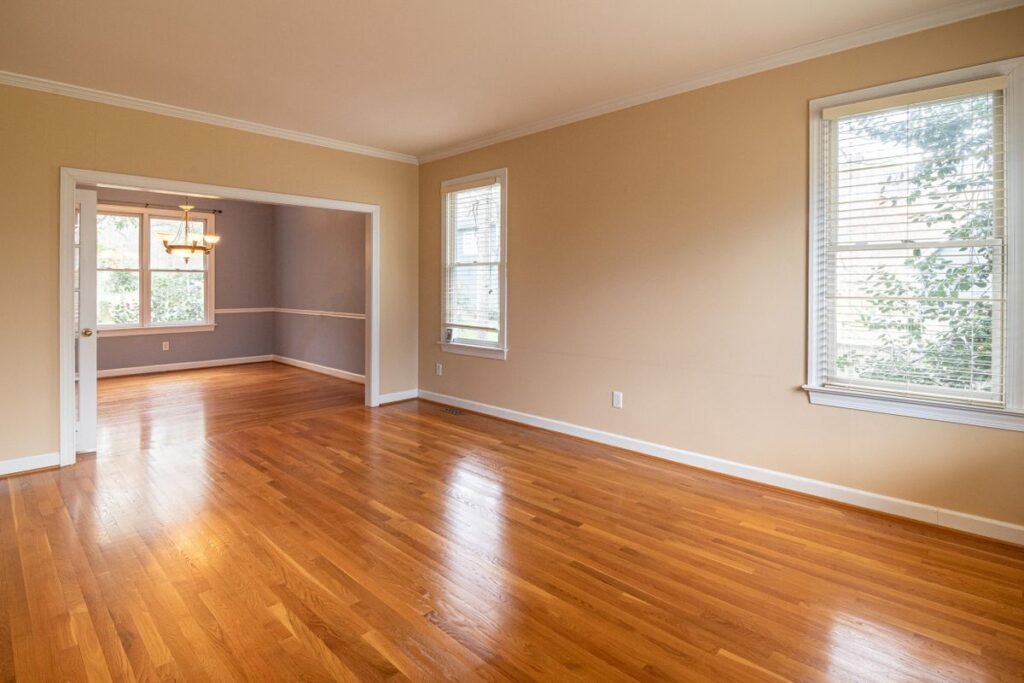
The best waterproof basement flooring for most homes is rigid core luxury vinyl plank with an SPC core, because it is fully waterproof at the surface, warm enough underfoot with the right underlayment, and forgiving over minor slab imperfections. Porcelain tile is the stronger choice when flooding is a real risk, because it cannot be damaged by standing water at all. Whichever you choose, the floor is only the finish layer, so test the slab for moisture and fix any leak first, because no flooring survives a basement that is still taking on water.

Test the slab before you shop for flooring
Every flooring decision starts with a moisture test, not a sample board. Tape a two foot square of clear plastic sheeting to the bare concrete, seal all four edges, and leave it for 24 to 48 hours. If condensation or darkening appears under the plastic, moisture is moving up through the slab, and you need a fully waterproof floor plus a vapor barrier, and possibly a drainage fix first. Skip this test and you risk installing a floor that buckles, smells, or grows mold underneath within a year.
Also note the water history of the room. A basement that has flooded even once needs a different floor than one that has only ever felt humid, and a room near a sump pump or a floor drain deserves the most water tolerant option you can afford. If you find an active leak during testing, fix it before you spend anything on flooring, and our basement leak repair guide will help you trace where the water is coming from and what the repair involves.
The five waterproof floors compared
Use this comparison to match the floor to the room, not just to the look you like. Cost figures are typical installed ranges from published flooring guides, and your quote will vary with slab preparation, room size, and trim work.
| Flooring | Waterproof at surface | Warmth | Typical installed cost per sq ft | Best for |
|---|---|---|---|---|
| Luxury vinyl plank, SPC core | Yes, 100 percent | Moderate, warmer with underlayment | $4.50 to $13.50 | Most finished basements |
| Porcelain or ceramic tile | Yes, 100 percent | Cold without radiant heat | $5 to $15 | Flood prone basements |
| Epoxy coating | Yes, seamless surface | Cold and hard | $3 to $12 | Utility basements |
| Carpet tiles, waterproof backing | Resistant, not fully waterproof | Warmest option | $3 to $8 | Dry basements |
| Rubber flooring | Yes, 100 percent | Moderate, cushioned | $3 to $8 | Home gyms and playrooms |
Luxury vinyl plank: the best all round choice
Waterproof flooring for basements starts with luxury vinyl plank, usually called LVP, and for good reason. The planks are fully synthetic, so water cannot swell them, and a rigid SPC core, made from stone plastic composite, stays stable when basement temperatures swing between seasons. Look for a 12 mil wear layer or thicker, a click lock floating installation that needs no glue, and an approved underlayment for warmth on cold concrete. Loose lay LVP deserves a mention too, because its heavy planks can be lifted one by one after a water event, so you can dry the slab and relay the same floor.
Choose LVP when the basement is a living space, a bedroom, an office, or a playroom, and when the moisture test shows normal slab dampness rather than active water. Avoid it only where the room floods regularly, because water can still travel beneath a floating floor and into baseboards, even when the planks themselves survive. If your basement needs waterproofing work before any floor goes down, read our guide to interior basement waterproofing.
Porcelain tile: the flood proof choice
Porcelain tile is the most water tolerant finish you can put in a basement. Its water absorption rate is 0.5 percent or less, so the tile itself is effectively waterproof, mold cannot grow on it, and cleanup after a flood is a matter of mopping and drying, not replacement. It is the right call for laundry rooms, utility areas, rooms with a history of flooding, and any space near a sump pump.
The trade offs are real. Tile feels cold underfoot, so plan for area rugs or radiant heat if the room is a living space. Installation needs a flat, sound slab, and grout lines need sealing, because grout is the one part of a tile floor that can absorb water. Choose tile when flood protection matters more than warmth, and choose LVP when comfort matters more than surviving a flood. Before you commit to any finish, our article on is basement waterproofing worth it will help you decide honestly.
Epoxy, carpet tiles, and rubber: the specialists
Epoxy is a two part resin coating applied directly to the concrete slab, and it creates a seamless, nonporous surface with no joints or grout lines for water to enter. It is the best value for utility basements, workshops, and laundry areas where durability and easy cleaning matter more than looks, and it brightens a dark basement because it reflects light. Plan for professional preparation, because epoxy fails on a dirty, damp, or poorly etched slab.
Carpet tiles are the warmest and most comfortable basement floor, and their modular design is the real advantage, because you can lift and replace only the tiles that get wet instead of replacing a whole room of carpet. Use them only in dry basements with a dehumidifier keeping humidity below 50 percent and no flooding history. Rubber flooring, in interlocking tiles or rolled sheets, is the pick for home gyms and playrooms, because it absorbs impact and handles moisture without complaint.

What never belongs in a basement
Solid hardwood, standard laminate, and wall to wall carpet should never go in a basement. Solid hardwood cups and gaps as it absorbs moisture from the slab, standard laminate swells at the seams when it gets wet, and wall to wall carpet traps moisture and feeds mold after even a small water event. Engineered hardwood is a partial exception, because its layered construction is more stable, but it belongs only in a basement with proven low humidity, no leak history, and a moisture barrier, and even then it is riskier than vinyl or tile. If a flooring salesperson tells you a water sensitive product is fine below grade, ask them to put that promise in writing with a warranty that covers moisture damage. Most will not, and that tells you everything.
Your pre install checklist
Work through this list in order, and do not skip a step to save a weekend. Fix every leak and confirm the basement stays dry through a heavy rain. Test slab moisture with the plastic sheet test and a meter. Level the slab, because rigid planks bridge only small imperfections and tile needs a flat bed. Lay the vapor barrier or underlayment the flooring maker approves, not a generic substitute. Leave the expansion gap the maker specifies around the perimeter, because a floating floor that cannot move will buckle. Keep a few spare planks or tiles from the same batch, so a future repair matches. If the moisture test shows a problem you cannot explain, call ElmLeak at +1 (972) 472-8573 for a Little Elm inspection before you order flooring.
Frequently asked questions
What is the best waterproof flooring for a basement?
Rigid core luxury vinyl plank with an SPC core is the best all round choice for most basements, because it is fully waterproof, comfortable, and easy to install over concrete. Porcelain tile is the better pick when flooding is a real risk.
Can you put vinyl plank flooring directly on concrete?
Yes, in most cases, as long as the slab is clean, level, and dry, and you use the underlayment or moisture barrier the maker approves. Test the slab for moisture first, and fix any leak before installation.
Is laminate flooring okay in a basement?
Standard laminate is not a good basement floor, because its wood fiber core swells when it absorbs water. Some makers sell water resistant laminate, but it is still riskier than vinyl plank or tile.
Do I need a vapor barrier under basement flooring?
Yes, in most basements. Even a waterproof floor benefits from a vapor barrier or an approved underlayment with a moisture barrier, because it stops ground moisture from reaching the flooring and the room above.