
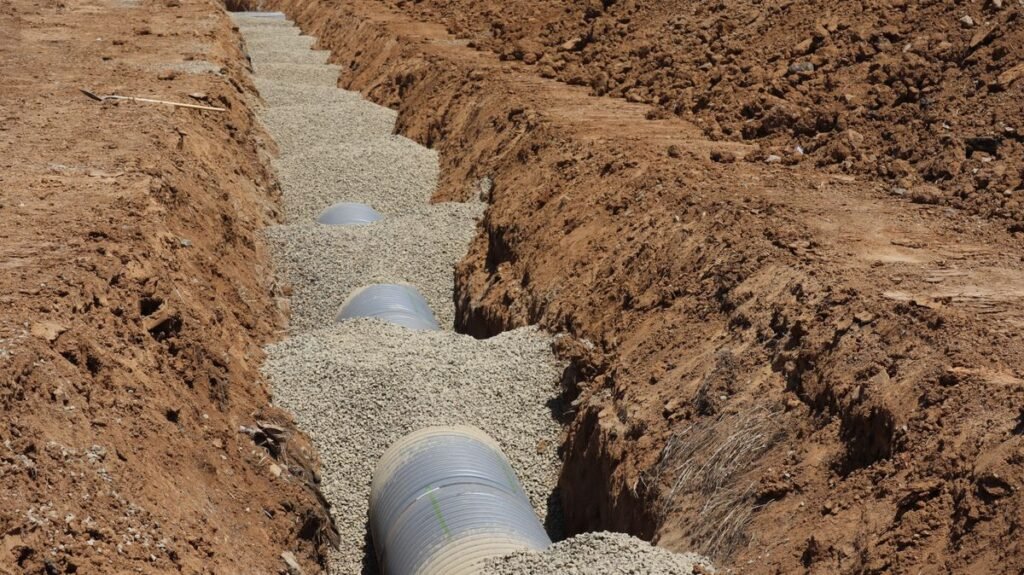
Open trench sewer repair is the oldest way to fix a broken sewer line, and it is still the right answer in some situations. The direct answer is that open trench means digging a trench along the full pipe path, removing the damaged section, and installing new pipe in its place. It is the right call when the pipe has collapsed, has a severe belly, is back pitched, needs regrading for proper slope, or needs upsizing to a larger diameter. This guide explains what open trench repair involves, when it beats trenchless methods, how a camera inspection decides between them, and what to expect from the work.
What Open Trench Sewer Repair Involves
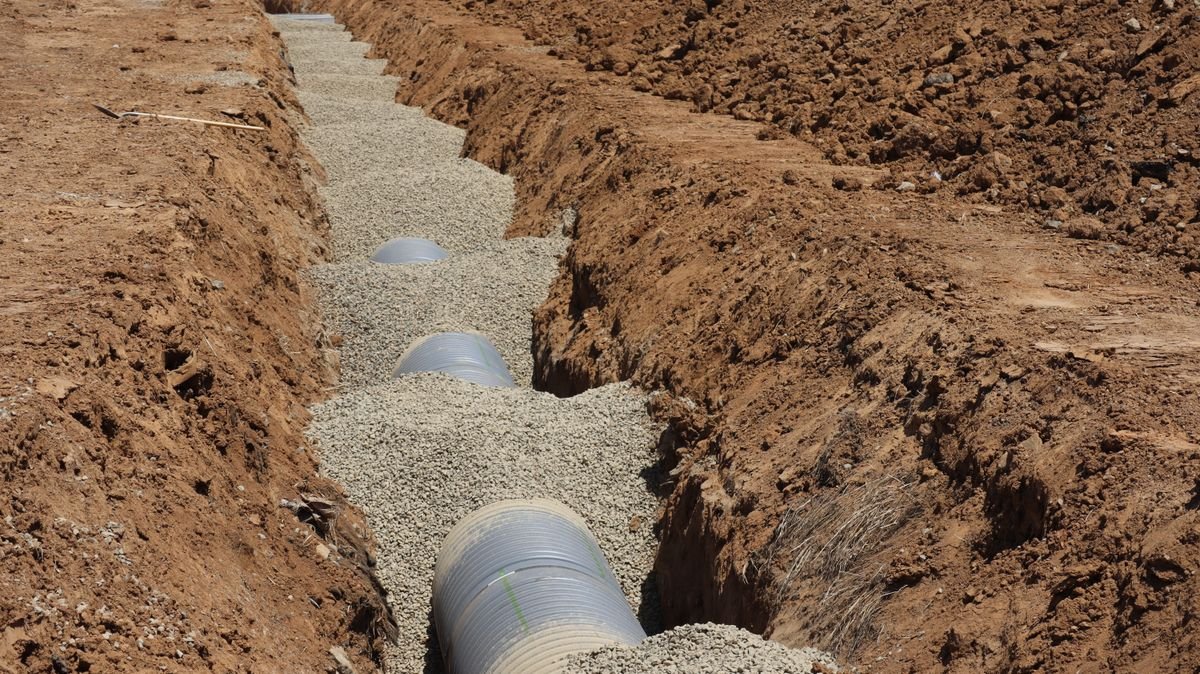
The work starts with locating the pipe and marking the trench path, then digging along the full length of the damaged section. The old pipe is exposed, the damaged section is cut out and removed, and new pipe is laid in its place, joined to the sound pipe at each end. The new section is set to the correct slope, bedded in suitable material so it cannot settle, and tested before the trench is filled.
Because the pipe is fully exposed, the crew can see exactly what failed and why. A collapsed section, a cracked joint, a root intrusion, or a section that has sunk into a belly is visible in the open trench, and the repair can be checked by eye before the ground is closed. That visibility is the main advantage of the method. The disadvantage is equally plain: digging a trench through a yard, a driveway, or a patio disrupts the surface, and the surface has to be put back properly afterward.
When Open Trench Is the Right Call
Open trench is the right call in five situations, and each one is a case where a trenchless method cannot do the job properly. A collapsed pipe has lost its shape, so there is no channel for a liner to follow and no path for a bursting head to pull through. A severe belly is a low spot where waste collects and the line drains slowly, and a liner would simply follow the belly and keep the same poor slope. A back pitched pipe slopes the wrong way, so waste flows backward, and only regrading the pipe to the correct slope fixes it. A pipe that needs upsizing cannot be enlarged by lining it, because a liner makes the bore slightly smaller, not larger.
If none of those five apply, trenchless repair is usually the better choice, because it avoids the digging and the restoration. The decision should be made on the condition of the pipe, not on preference, and not on the equipment a particular contractor happens to own. Ask any contractor who recommends open trench to explain which of the five conditions applies to your pipe, and to show you the camera footage that proves it.
How Camera Inspection Decides
A camera inspection decides, not preference, and it should happen before any method is chosen. A small camera is pushed through the sewer line from a cleanout or an access point, and the footage shows the inside of the pipe in real time. The technician records the location and the depth of every defect, measures the belly, checks the slope, and notes where the pipe changes material or diameter.
Ask to watch the footage yourself, and ask the technician to point out the defect that drives the recommendation. A collapsed section looks like a wall of soil where the pipe should be. A belly shows as standing water that does not drain as the camera passes. A back pitched section shows water flowing toward the camera instead of away from it. If the footage shows a single crack with good slope, trenchless repair is usually possible. If it shows a collapse, a severe belly, or a long run of failed pipe, open trench is the honest recommendation. See our guide on what trenchless sewer repair is and our comparison of trenchless sewer repair pros and cons.
Open Trench Compared With Trenchless Repair
This comparison covers the two main trenchless methods, CIPP lining, where a resin soaked liner is cured inside the old pipe, and pipe bursting, where a new pipe is pulled through while the old pipe is broken outward. Use it to judge which method fits your pipe, not to pick a favorite in advance.
| Factor | Open trench | Trenchless: CIPP lining and pipe bursting |
|---|---|---|
| Excavation | A trench is dug along the full pipe path, so the yard, driveway, or patio above the line is opened | Only small access pits are dug, so most of the yard stays untouched |
| Best fit | Collapsed pipe, severe belly, back pitched pipe, regrading, or upsizing | Cracked pipe that still holds its shape, short damaged sections, good slope |
| Timeline | Usually takes longer, because digging, pipe laying, backfilling, and restoration all take time | Often completed faster, because most of the work happens through the access pits |
| Yard damage | High, the trench path must be restored, including lawn, paving, and planting | Low, limited to the access pits and the equipment path |
| When it is ruled out | Rarely ruled out, but access under a building or a protected structure can make it impractical | Ruled out by a collapsed pipe, a severe belly, a back pitched line, or upsizing |
Safety, Permits, and Restoration
Deep lines need trench shoring for safety. An open trench deeper than a few feet can collapse without warning, and shoring is the steel or timber support that holds the trench walls apart while the crew works inside it. Never enter an unshored trench, and never let a contractor work in one. Ask who is responsible for shoring, and check that it is in place before any work starts below ground level. Underground utilities are the second safety issue: the trench path must be marked for gas, water, electric, and telecom lines before digging begins.
Permits are usually required for sewer line replacement, and the contractor should handle them. Ask whether the quote includes the permit, the inspection, and the final sign off, because a job without a permit can cause problems when the house is sold. Restoration of yard, driveway, and landscaping is part of the job, not an extra, so ask for the restoration scope in writing: what surface will be reinstated, what material will be used, and whether the contractor will return to fix settlement. Our guide to sewer line repair options in Little Elm covers the full range of choices before you commit to one.
When to Call ElmLeak
Call for help if your drains keep backing up, if the camera shows a collapse or a severe belly, if a previous trenchless repair has failed, or if you have been quoted open trench repair and want a second opinion. If you are in Little Elm and your sewer line needs a decision, call ElmLeak at +1 (972) 472-8573.
Frequently Asked Questions
What is open trench sewer repair?
Open trench sewer repair means digging a trench along the full pipe path, removing the damaged section, and installing new pipe in its place. The new section is set to the correct slope, bedded so it cannot settle, tested before the trench is filled, and the surface above is restored afterward.
When does open trench beat trenchless repair?
Open trench beats trenchless when the pipe has collapsed, has a severe belly, is back pitched, needs regrading, or needs upsizing. A trenchless liner follows the shape of the old pipe, so it cannot fix a collapse, a belly, a wrong slope, or a pipe that is too small.
How does a camera inspection decide the method?
A camera pushed through the line shows the inside of the pipe in real time, including collapses, bellies, slope, and joints. A single crack with good slope usually allows trenchless repair, while a collapse or a severe belly points to open trench. Ask to watch the footage and have the defect pointed out.
Is open trench repair safe for a deep sewer line?
Yes, when the trench is shored properly. Deep lines need trench shoring to hold the walls apart while the crew works, and utilities must be marked before digging begins. Permits are usually required, and restoration of the yard, driveway, and landscaping is part of the job.