
Main Drain Cleaning: Signs Your Main Drain Is Clogged and What to Do First
Your main drain carries wastewater from every fixture in your home to the sewer line outside. When it clogs, the problem does not stay in one bathroom. It shows up across the home, often at the lowest drain first, and it can turn into a backup if you keep using water. The first decision matters: stop heavy water use, work out whether the clog is in the main drain or in one fixture, and choose a clearing method that fits the cause. A quick chemical pour or a plunger on one toilet rarely fixes a main drain clog, and it can waste the time you need to prevent sewage from reaching your floors.
How a main drain clog shows itself
Look for a pattern, not a single event. Several drains slow at the same time, a toilet gurgles or bubbles when a shower runs, a tub fills while the washing machine drains, or water rises in a floor drain or low shower. A sewer smell that returns after cleaning, and drains that clear briefly then slow again, also point to the main drain. These signs mean wastewater is meeting resistance in a shared pipe. If only one sink is slow while everything else drains normally, the clog is probably near that fixture, and a local fix is the right first try. If the pattern spreads, treat it as a main drain problem and reduce water use right away, especially laundry, dishwashers, and long showers.
What to do first, and what to avoid
First, stop running large amounts of water and keep people away from any water that has backed up, because that water is not clean. Second, check whether a low drain or cleanout is rising, but do not open a pressurized cleanout yourself and do not stand over it, because a release can be sudden. Third, avoid chemical drain cleaners on a main drain clog. They rarely reach a deep clog in useful strength, they can damage pipes and fixtures, and they create a hazard for anyone who later opens the line. Fourth, note any recent changes, such as heavy grease down the kitchen drain, wipes flushed by mistake, a large laundry load, or work near the line outside. Those details help separate a grease clog from a root intrusion or a broken section. If sewage is already inside the home, call for professional help promptly and keep the affected area clear until the line is open and cleaned.
Clearing methods and how to choose one
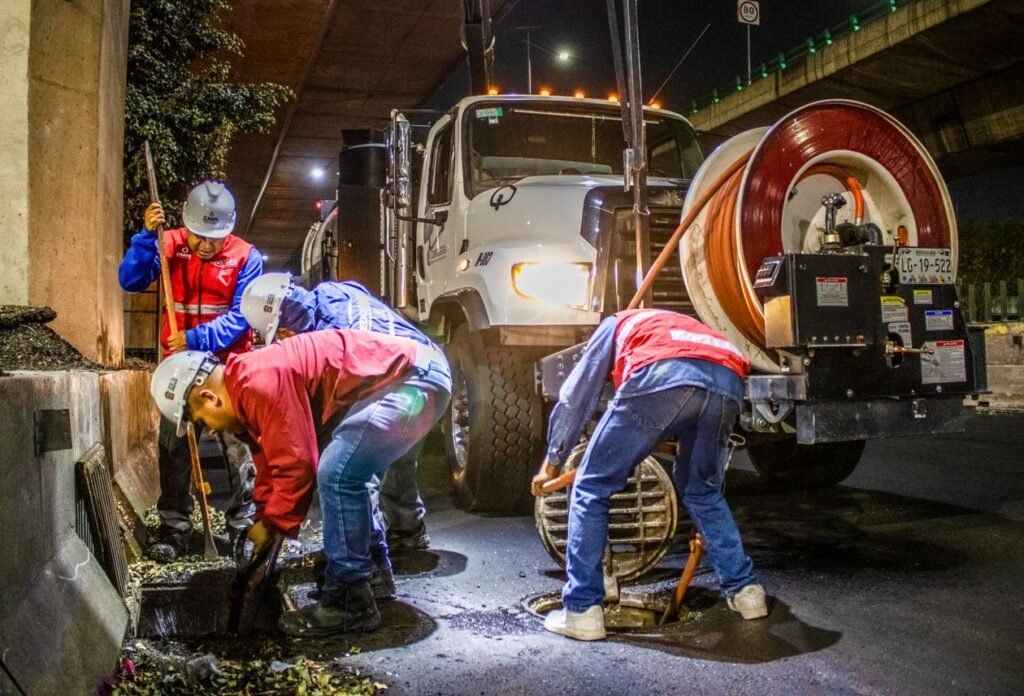
A cable can open a path through a soft or recent clog, and it is often the fastest first step. High pressure water cleaning goes further: it scours the pipe walls and flushes grease, roots, and scale out, which helps when clogs return or when the line is coated with buildup. The choice depends on cause, pipe condition, and history. A first time, simple clog may need only a cable. A repeat clog, a grease heavy kitchen line, or a root prone line usually needs a fuller clean plus a camera check to confirm the result. A camera check is especially important when the clog returns quickly, because it can reveal a break, an offset joint, or a low section that cleaning alone will never fix. If the camera finds pipe damage, the next decision changes from cleaning to repair. For that case, read our guide to sewer line repair before you agree to another cleaning visit.
When the main drain needs more than cleaning
Cleaning is the wrong plan when the pipe itself is broken. Warning signs include a line that clogs again within days of a full clean, sewage at the lowest drain after modest water use, wet or sunken ground above the line, and a camera report that names a collapse, a severe offset, or a section holding water. In those cases, repeated cleaning spends money without changing the cause. Ask for the camera footage, the distance to each problem, and a written scope before any repair. Also ask whether the problem sits inside your property or near the public connection, because that boundary can affect who is responsible for the work. If your home also shows water loss or warm spots on a slab floor, check our slab leak detection guide, since a slab leak can add confusion to a drain problem.
Preventing the next main drain clog
Prevention starts with what goes down the drain. Keep grease out of the kitchen sink by wiping pans and disposing of cooking fat in the trash, not by washing it down with hot water, because grease cools and hardens further down the line. Flush only toilet paper and human waste, never wipes, paper towels, cotton products, or hygiene items, even when packaging calls them flushable. Use hair catchers in showers and tubs, and clear them often. If you have trees near the line, ask about a camera check on a sensible schedule, because roots grow back and early detection beats an emergency backup. After any cleaning, ask for a written report that names the method, the condition found, and the advice for next time.
Frequently Asked Questions
Why do several drains clog at the same time?
Several drains share one main drain. When that shared pipe is blocked, wastewater from every fixture meets the same resistance, so the slowest or lowest drains show the problem first. A single slow fixture, by contrast, usually points to a local clog near that fixture.
Can I use a plunger on a main drain clog?
A plunger may move a small, local clog, but it rarely clears a deep main drain blockage and it can push water into another fixture. If several drains are affected or sewage is rising, stop plunging and reduce water use until the main line is assessed professionally.
Are chemical drain cleaners safe for a main drain?
No, they are a poor choice for a main drain clog. They rarely reach the clog in useful strength, they can harm pipes and fixtures, and they leave a chemical hazard in the line for anyone who later opens it. A cable or water cleaning method, chosen after diagnosis, is safer and more effective.
How do I know if cleaning worked?
Fixtures should drain normally under normal use, not just during a brief test, and a camera check should show a clear pipe with no remaining major blockage. Ask for that confirmation in writing. If drains slow again within days, the cause may be pipe damage rather than leftover debris.
Call for a clear next step
If several drains are slowing together or sewage is rising at a low drain, reduce water use and get the main drain diagnosed before the problem spreads. Describe the pattern, the fixtures affected, and any trees or recent changes near the line, and ask for a camera check if the clog returns. Call +1 (972) 472-8573 for help deciding the next step for your home in Little Elm and nearby areas.