
A sewer line leak is easy to confuse with other problems, because its early signs can look like a slab leak, a drain blockage, or a yard drainage issue. Sewage water, however, follows its own route out of a cracked pipe or a failed joint, and it leaves a distinctive set of clues inside and outside the home. This guide explains those clues, the detection methods professionals use, and how to tell a sewer leak from a supply leak before anyone digs. It is written as general help to support a sound decision, not as a promise about any single visit outcome.
Inside signs of a sewer line leak
Inside the home, a sewer leak often announces itself by smell first. A persistent sewage or musty odor near a bathroom, a laundry area, or a floor drain, especially one that worsens after heavy water use, deserves attention. You may also notice several drains slowing together, toilets gurgling when another fixture drains, water backing up in a tub or shower when a toilet flushes, or dampness and staining on a wall or floor near a sewer run. A single slow drain is usually a local blockage, but a pattern across fixtures suggests a problem further down the line, where a leak and a partial blockage often occur together.
Outside signs in the yard
Outside, a sewer leak can show as a patch of grass that grows faster and greener than its surroundings, soil that stays wet or sinks above the sewer route, or a foul smell in one area of the yard after rain or heavy indoor use. In some cases, sewage may surface as a dark, foul smelling puddle, which should be treated as a health concern: keep children and pets away, avoid contact with the water, and seek advice promptly. Note the location of the sewer route from the house to the street, since a leak is most likely along that line or at a joint, a bend, or a connection. Photos of the affected area, with a note of when the signs appear, are far more useful than a vague description later.
Detection methods, from simple to technical
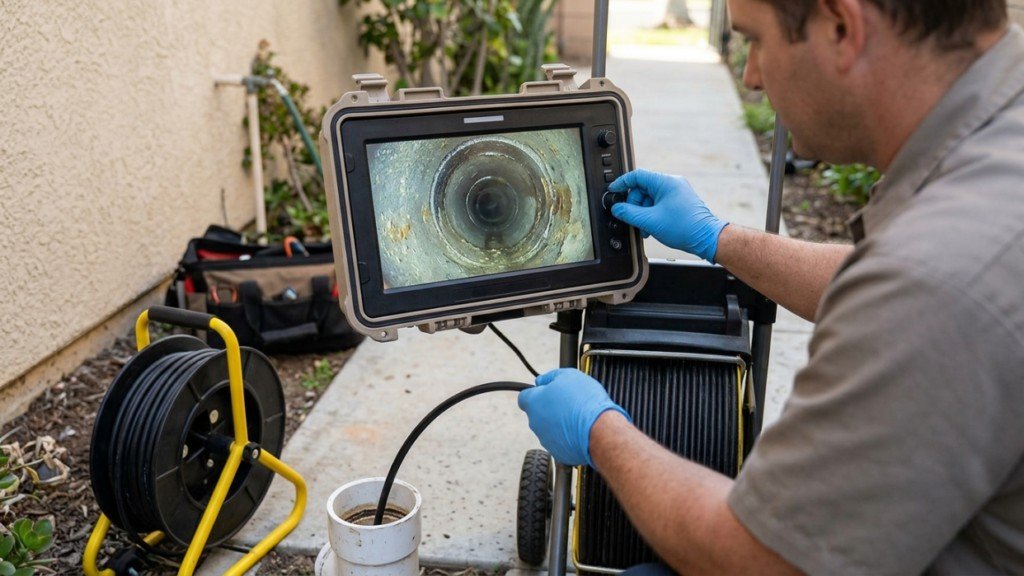
Detection usually starts with questions and a visual check: which fixtures are affected, when the problem started, and whether it follows heavy water use. A camera inspection is the central tool, because it shows cracks, offsets, root intrusion, standing water, and the exact distance to the damage from an access point. In some cases, a dye test can trace a leak path, and a smoke test can reveal where sewer gas escapes through cracks or faulty connections. Acoustic listening, which is useful for pressurized supply leaks, is less central for a gravity sewer line, since sewer water does not flow under pressure in the same way. The right combination depends on the pipe, the access points, and what the camera already shows. Ask for the findings in plain language, with distances and photos, so the repair plan targets the real section.
Separating a sewer leak from a slab supply leak
A slab supply leak loses clean water under pressure, so it often brings a rising water bill, warm spots on the floor for a hot line, or the sound of running water with no tap open. A sewer leak loses wastewater by gravity, so it more often brings smells, slow drains across fixtures, and yard signs along the sewer route, without a matching rise in clean water use. Both can cause damp floors and foundation concerns, which is why testing matters rather than guessing from one symptom. If supply side testing is needed, our slab leak detection guide explains that process, while our sewer line repair page covers the sewer repair setting. A clear diagnosis first prevents a repair in the wrong system.
What to do while you wait for help
Reduce water use in the affected part of the home, especially heavy loads such as long showers, laundry, and dishwasher cycles, since each load sends more water toward the damaged section. Avoid chemical drain cleaners, which can damage pipes further and make later work less safe. Keep the affected yard area clear, do not let children or pets play in standing sewage water, and wash hands after any contact. If sewage is backing up into the home, stop using the affected fixtures and seek advice promptly, because continued use will spread the problem. Write down which fixtures are affected, when the signs started, and what you have already tried, so the visit starts with facts rather than guesswork.
A lesson from real work
A lesson from real work is to separate sewer signs from slab signs early, because the repair path is completely different. Sewer trouble often shows in drains, smells, and yard patches, while a slab supply leak often shows in flooring, warmth, and water loss. Mixing the two up sends testing down the wrong line. The useful habit is to list the signs you actually see, inside and outside, and let that list decide which kind of testing comes first.
Frequently Asked Questions
Can a sewer leak exist without a backup?
Yes. A crack can leak wastewater outward into soil while still allowing flow through the pipe, so yard signs and smells may appear before any backup. A backup usually means the pipe is also blocked or severely damaged, but its absence does not rule out a leak.
Is a sewer smell always a sewer line leak?
No. A dry drain trap, a faulty wax ring under a toilet, or a vent problem can also let sewer gas into a home. Those causes are usually local and easier to fix. A smell that affects several areas, follows heavy water use, or comes with slow drains points more toward a line problem.
What does a camera inspection actually show?
It shows the inside of the pipe in real time: cracks, offsets, joints, roots, debris, standing water, and the distance from the access point to each defect. That record lets a repair target the damaged section rather than replacing a whole run on a guess.
Should I use the drains normally while waiting for a visit?
Light, essential use is usually reasonable if there is no backup, but heavy use should be reduced until the problem is understood. If sewage is backing up, stop using the affected fixtures and seek advice promptly.
Call for a Clear Next Step
If smells, slow drains across fixtures, or yard signs point toward a sewer line leak, talk through the pattern and any camera findings before choosing a repair. Call +1 (972) 472-8573 to discuss the next step for your home in Little Elm.