
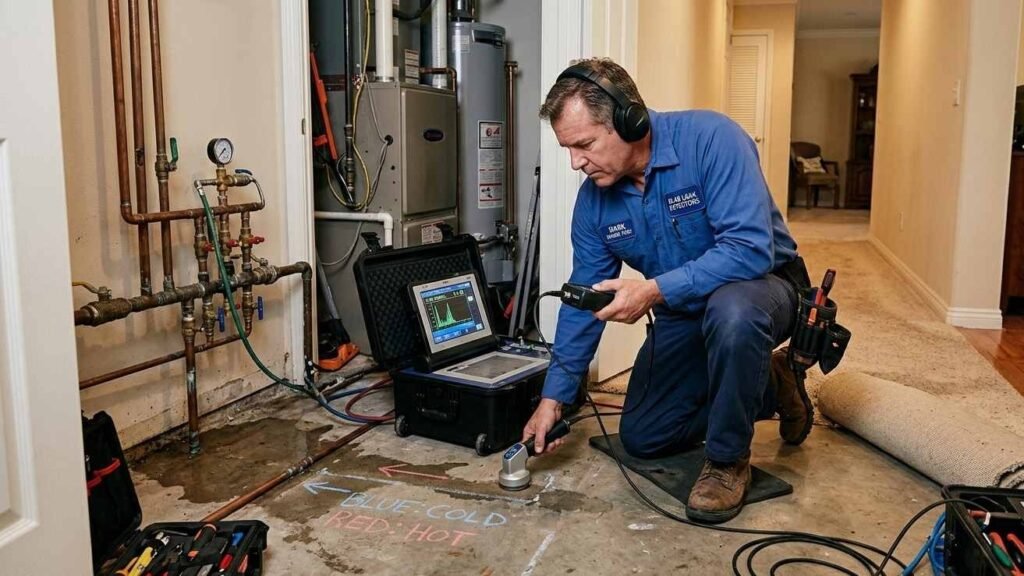
A plumbing leak under a concrete slab is a specific kind of problem, and confirming it takes more than noticing a damp floor. Water under a slab can come from a supply line, a drain line, a water heater connection, or even from outside the plumbing system, and each source leads to a different repair. This guide focuses on the confirmation steps: how to narrow the leak to the plumbing system, how to separate a hot line from a cold line, and how tracing works once a slab leak is suspected. It complements general detection guides by focusing on the plumbing logic behind the tests.
Confirm the loss is plumbing, not drainage or rain
The first question is whether water is actually being lost from the plumbing system. A meter test answers it. With all taps, appliances, and irrigation off, note the meter reading, wait, and read it again. If the meter moves, the supply system is losing water somewhere. If it does not move, the dampness may come from drainage, condensation, a one time spill, or water entering from outside, rather than a steady supply leak. Also check the obvious points first: toilet fill valves that run quietly, a water heater relief discharge, a hose bibb that drips, and a softener or filter connection. Ruling out those visible points first prevents a slab investigation for a leak that sits in plain sight.
Separate a hot line leak from a cold line leak
Hot and cold supply lines run separately under the slab, and knowing which one leaks changes both the symptoms and the repair plan. A hot line leak often brings a warm spot on the floor, a water heater that runs more often, or hot water that arrives inconsistently. A cold line leak may show no warm spot at all, only water loss, damp flooring, or a musty smell. A simple isolation check can help a professional narrow it down: closing the hot water outlet from the heater and watching the meter can show whether the loss continues on the cold side alone. Do not attempt to open walls or break concrete on the basis of this check alone. Its value is in guiding professional testing to the right line, not in proving the exact spot.
Use fixture patterns to narrow the area
Fixture patterns give useful clues about which run may be involved. Note which rooms show dampness, warm spots, or flooring changes, and which fixtures lose pressure or behave oddly. A leak near a bathroom group will often show signs in that bathroom first, while a leak in a main run may show signs along a hallway or in a central room. Keep a simple note of where and when each sign appears, including whether it worsens after hot water use, after a shower, or at night when the house is quiet and running water is easier to hear. That pattern, combined with the meter and isolation checks, helps testing focus on a shorter stretch of pipe rather than the whole slab.
How professional tracing builds on your checks
Professional tracing usually combines pressure testing of individual lines, acoustic listening for the sound of escaping water, and thermal imaging for hot line leaks, along with a review of the home layout and pipe routes. Pressure testing can confirm which line loses pressure. Listening can narrow the sound to a zone. Thermal imaging can show a heat pattern for a hot leak. None of these tools alone proves the spot with certainty in every case, which is why a careful tester will cross check findings rather than relying on a single reading. Ask what each test showed, how the findings agree, and what uncertainty remains before any concrete is opened. Our slab leak detection guide explains those methods in more detail.
What happens after the line is traced
Once the leaking line and its general location are known, the repair conversation turns to access and route. Options often include a spot repair through the slab, rerouting the line above ground or through walls, or tunneling beneath the slab, depending on the pipe, the location, and the condition of the surrounding lines. Each option has different effects on flooring, dust, time, and future access, so the choice should be made with a written scope, not on the spot while concrete is already open. Our slab leak repair guide explains those choices, and our line rerouting page covers the rerouting path in particular. Get the plan, the affected area, and the restoration scope in writing before work begins.
A lesson from real work
A lesson from real work is to confirm the loss is plumbing before tracing begins. A meter test with everything off, plus a check for rain or drainage causes, keeps tracing focused on the right system. Tracing without that confirmation can chase a damp patch that has nothing to do with a supply line. The useful habit is to prove the loss first, then narrow it by fixture pattern and temperature, and only then bring in listening equipment.
Frequently Asked Questions
Does a slab plumbing leak always show a warm spot?
No. Only a hot water line leak reliably creates a warm spot, and even then the warmth may be faint under tile or thick flooring. A cold line leak may show only water loss, dampness, or a musty smell. Absence of a warm spot does not rule out a slab leak.
Can I trace a slab leak myself with a listening device?
Basic listening may help you notice running water when the house is quiet, but pinpointing a leak under concrete needs training, quiet conditions, and cross checking with pressure tests. Home checks are best used to guide a professional to the right area, not to choose a break point in the slab.
Why does the meter move if I cannot see any water?
Water under a slab can drain into soil, collect under flooring, or evaporate from a warm slab surface, so a significant loss may show little visible water at first. The meter is often the earliest reliable witness, which is why its readings matter even when the home looks dry.
Should I keep using water while a slab leak is suspected?
Essential use is usually reasonable while you gather readings and arrange testing, but reduce wasteful use and watch for spreading dampness, buckling flooring, or a rapidly rising bill. If water damage is spreading or the floor is changing, seek advice promptly and be ready to shut off the main supply if instructed.
Call for a Clear Next Step
If your meter moves with everything off, or if dampness and warm spots point under the slab, talk through your readings and fixture pattern before anyone opens concrete. Call +1 (972) 472-8573 to discuss the next step for your home in Little Elm.