
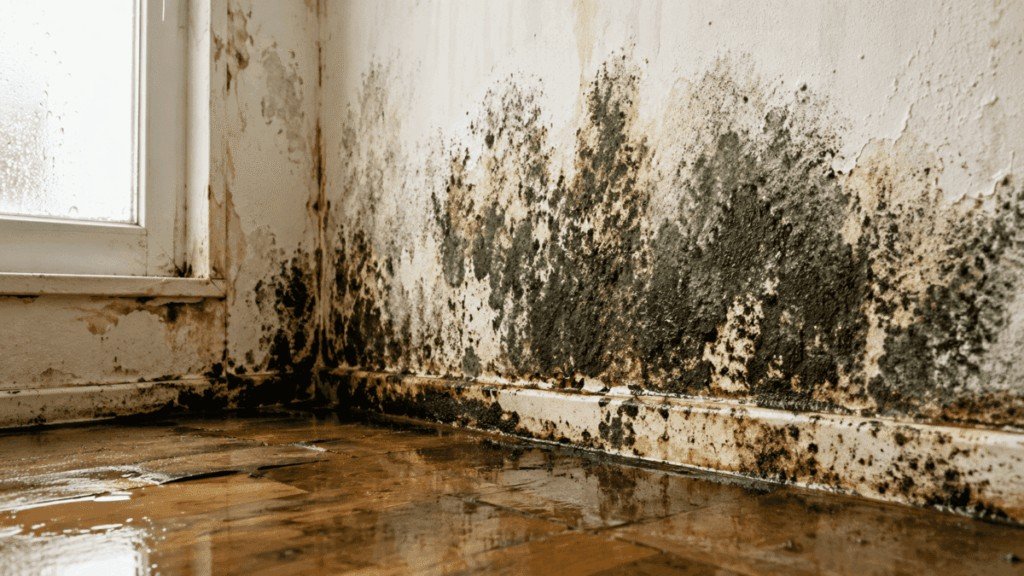
A slab leak does more than waste water. It keeps concrete, flooring, and wall bases damp for as long as it runs, and damp building materials are where mold can gain a foothold. Mold does not appear instantly, and it does not always appear where the leak sits, since moisture can travel through concrete and collect in a closet, behind a baseboard, or under flooring some distance away. This guide explains how slab leak moisture leads to mold risk, what checks you can do safely, and how to think about drying and cleanup once the leak is fixed. It is general help, not medical advice and not a claim about a listed remediation service.
How moisture travels from a slab leak
Water escaping under a slab does not stay in one neat puddle. It wicks through concrete, spreads under flooring, and rises into baseboards, drywall bottoms, and stored items that touch the floor. Warm water from a hot line leak can also raise humidity in nearby rooms, which lets moisture settle on cooler surfaces. That is why mold risk is not limited to the exact spot above the leak. A musty smell in a closet, a damp patch on a low wall, or a soft baseboard near a slab leak zone can all reflect moisture that traveled from the source. The longer the leak runs, the wider that damp zone can become, which is why early detection matters more than any single cleaning product.
Signs of moisture and mold to watch for
Watch for a persistent musty or earthy smell that does not fade with ventilation, visible dark or greenish spotting on low walls, baseboards, or flooring edges, paint that bubbles or peels near the floor, baseboards that feel soft or pull away, and flooring that stays damp or develops dark joints. Also note any increase in allergy like symptoms at home, such as sneezing or congestion that improves when you leave the house, though those symptoms have many causes and do not prove mold on their own. Photograph any visible growth with a date, note its location relative to the suspected leak zone, and do not disturb large growths, since scrubbing or dry vacuuming can spread spores through the air. Small surface spots on a hard, washable surface are a different matter from growth inside drywall or under flooring, which needs a different approach.
Safe checks while the leak is still active
While the leak is still running, your priority is to find and fix the water source, not to launch a deep mold cleanup. You can check for dampness by touch on hard floors, by looking at low walls and baseboards, and by noting smells room by room. Avoid pulling up large areas of flooring or opening walls on your own, since that can expose more growth and spread moisture. Keep the area ventilated where possible, move soft items such as rugs, cardboard, and cloth away from damp zones, and do not place fans directly against a wet wall in a way that blows air across visible growth into living spaces. If anyone in the home has breathing difficulties, or if growth covers a large area, seek professional advice before disturbing the area. For the leak side of the problem, our slab leak detection guide explains how the source is confirmed.
Drying and cleanup after the leak is repaired
Once the leak is repaired, drying becomes the main job, and it should be judged by measurement, not by touch alone. Concrete and wall bases can feel dry on the surface while still holding moisture inside, so a professional drying check may use moisture readings to confirm the area is truly dry before flooring or drywall is restored. Wet soft materials that cannot be dried fully, such as saturated carpet padding or soft drywall, often need removal rather than cleaning. Hard surfaces can usually be cleaned once dry. Ask what drying method is planned, how dryness will be verified, and what materials will be removed versus cleaned, and get that scope in writing. Restoring flooring or walls over a still damp slab invites a return of the same problem. Our slab leak repair guide explains the repair step that must come first.
Preventing a repeat moisture problem
After repair and drying, a few habits reduce the chance of a hidden repeat. Watch the water meter from time to time with all water off, note any return of musty smells, warm spots, or flooring changes, and act on small changes early rather than waiting for visible growth. Keep baseboards and low walls clear enough to inspect, avoid storing cardboard directly on a slab floor in leak prone areas, and keep indoor humidity in a normal range with ventilation and, where needed, dehumidification. If a previous leak zone shows dampness again, treat it as a possible new leak, not as leftover dampness, and have it checked. Early action is far simpler than another round of drying and restoration.
A lesson from real work
A lesson from real work is to stop the water first, because drying before the leak is fixed only treats the symptom. A damp wall can be dried and cleaned, but if the leak still runs, the dampness returns and mold finds its way back. The useful habit is to fix the source, then dry, then check the same spots again after a few days. That order is what turns a cleanup into a lasting result.
Frequently Asked Questions
Does every slab leak cause mold?
No. Mold needs sustained moisture, a food source such as wood or drywall, and time. A leak found and fixed quickly, with prompt drying, may cause little or no growth. A leak that runs unseen for weeks or months is far more likely to create conditions where mold can grow.
Can I clean mold myself after a slab leak?
Small spots on hard, washable surfaces can often be cleaned with appropriate precautions, including gloves and ventilation. Growth inside walls, under flooring, or over a large area should be assessed professionally before disturbance, since hidden growth and airborne spread are real concerns.
Will fixing the leak make mold go away on its own?
Fixing the leak stops new moisture, which is essential, but existing growth and wet materials still need drying and, where needed, removal or cleaning. Without that step, damp materials can stay damp inside even after the leak is fixed.
How do I know the area is dry enough to restore?
Surface touch is not enough. Moisture readings in concrete, wall bases, and flooring, taken over time and compared with dry areas, give a far better answer. Ask how dryness will be verified before restoration begins, and keep that record with your repair file.
Call for a Clear Next Step
If dampness, a musty smell, or visible growth follows a suspected slab leak, talk through the leak checks and drying steps before restoring any flooring or walls. Call +1 (972) 472-8573 to discuss the next step for your home in Little Elm.