
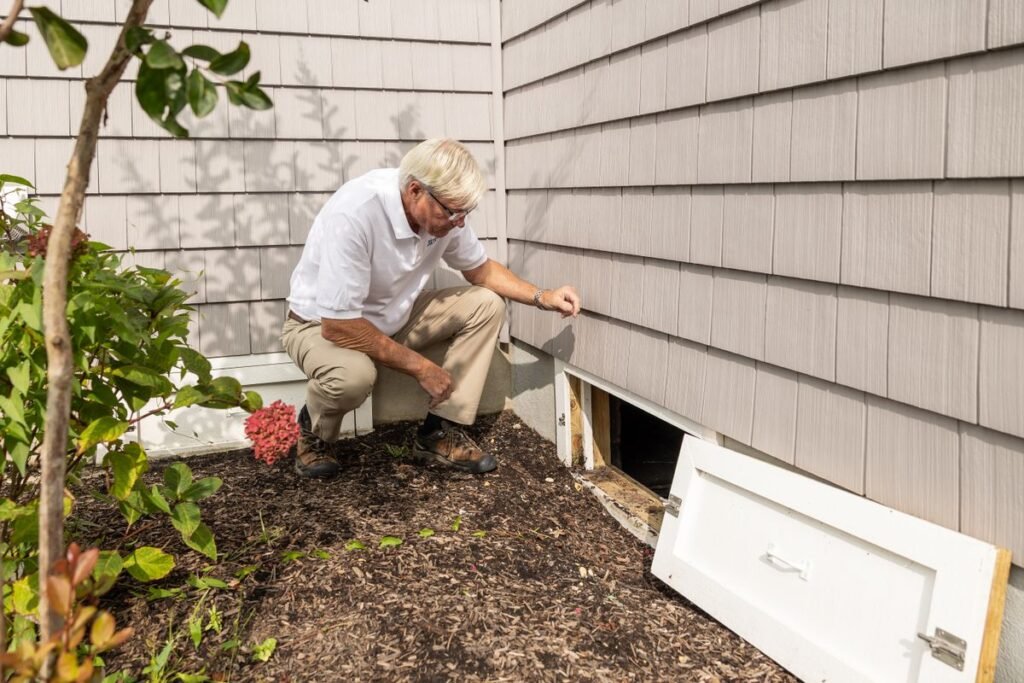
A crawl space that is too low to work in turns every repair into a slow and risky job, and many older homes in Texas have exactly that problem. The direct answer is that a crawl space counts as tight when the clearance falls well below 18 inches to the joists, and the usual minimum is 12 inches to beams. Older homes can be as shallow as 12 inches or less from soil to joist, which forces workers to move on elbows and stomach with no room to sit up, turn around, or swing a tool. This guide covers how to tell, why repairs are hard, the safety risks, and the real fixes.
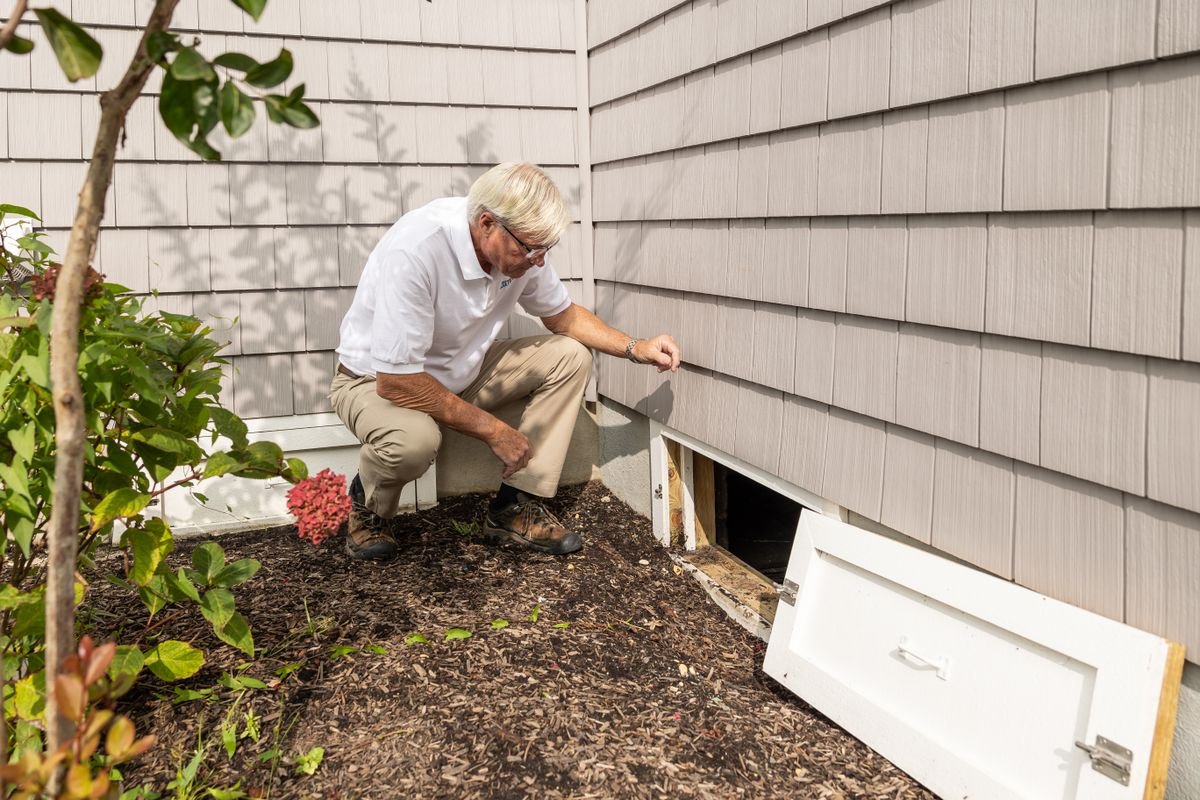
What Counts as a Tight Crawl Space
Clearance is measured from the soil or the vapor barrier up to the bottom of the floor joists, and the number decides whether a worker can move, see, and use tools. A space with 12 inches to beams is at the usual minimum, and anything below that is tight. Many older homes were built with 12 inches or less, and some spots drop to only a few inches, which means a worker cannot pass through at all without digging.
Measure your own crawl space before you plan any work. Take a tape measure through the access hatch, measure at several points, and write the lowest number down, because the lowest point is the one that decides whether a repair is possible. If you cannot reach the center from the hatch, that alone tells you the space is tight. A crawl space repair that looks simple from above can become a very different job once the crew sees the clearance inside.
Why Low Clearance Makes Repairs So Hard
Low clearance takes away leverage, and leverage is what most repairs depend on. A worker lying flat cannot pull a wrench with any force, cannot swing a hammer, and cannot turn a pipe fitting that has been in place for decades. Plumbing repairs suffer most, because a joint that needs a firm turn may need to be cut out and rebuilt instead, which takes longer and opens more of the system.
Inspection suffers just as much as repair. A camera on a pole can see part of a low space, but it cannot feel a soft joist, smell mold behind a duct, or spot a slow drip that only shows as a damp patch on the soil. That means problems in a tight crawl space are often found late, when the damage is already advanced. That extra time is real labor, and it is why a job in a tight crawl space often takes a full day where the same job in a tall space would take a morning.
Safety Risks in a Tight Crawl Space
A tight crawl space concentrates every hazard of an enclosed space, because the air barely moves and there is no quick way out. Stagnant air lets radon build up, and it lets mold spores stay suspended where a worker breathes them in. Pests and droppings are common in low spaces, and droppings from rodents can carry germs that become airborne when the soil is disturbed. Exposed wiring is a further risk, because a worker dragging themselves across the soil can snag a wire. Standing water adds the final risk, since water and wiring together are dangerous, and a flooded low space should never be entered until the water is gone and the power to that area is off.
Proper respirator and protective gear matter more in a tight space than in any other part of a home repair. A worker should wear a fitted respirator, not a paper dust mask, plus eye protection, gloves, knee pads, and coveralls that can be removed at the hatch. A second person should stay outside the hatch while someone is inside. Never send a family member into a tight crawl space without protective gear to take a quick look, because a quick look still means breathing the same air.
Moisture Control in a Low Space
Moisture control in a tight crawl space starts with the same two steps as in any crawl space, and both are harder to install when the clearance is low. A vapor barrier laid across the soil stops ground moisture from rising into the space, but laying it flat in a 12 inch gap means working it into place inch by inch. A dehumidifier holding humidity at 30 to 50 percent keeps the wood dry and slows mold, but the unit has to fit through the hatch and sit where air can reach it.
Start by fixing the water that comes from outside. Make sure gutters and downspouts carry roof water away from the foundation, and grade the soil so surface water flows away from the house. If the space has standing water after rain, fix the drainage before spending on a vapor barrier or a dehumidifier, because no barrier or machine can keep up with water that keeps flowing in. Our guide to crawl space drainage systems explains how drains and sump pumps move water out before it can pool. If you find mold, read our guide on crawl space mold first.
Real Fixes for a Tight Crawl Space
When the clearance itself is the problem, the fixes are physical, and each one should be weighed against the value of the work it unlocks. The most common fix is a center access trench excavation, where a shallow trench is dug down the middle of the crawl space to create a path a worker can move along. The trench does not raise the whole space, but it gives access to the pipes and ducts that run through the center.
Rigid foam or spray foam insulation is the second fix, and it helps in a different way. In a low space, insulation fitted tightly to the walls and the rim joist reduces condensation on cold surfaces, which is often the main moisture source in a tight space. Rigid foam boards can be cut to fit without much working room, while spray foam reaches into gaps a worker cannot reach by hand. In extreme cases, the only real fix is raising the house, which is a major structural job only worth considering when the low space is blocking essential repairs. Get a structural engineer to assess the house first, and get the assessment in writing.
When to Call ElmLeak
Call for help if your crawl space has standing water, if you smell mold or mustiness inside the house, or if a pipe or duct under the house needs repair and the space is too low to reach it. If you are in Little Elm and your crawl space is too tight to inspect safely, call ElmLeak at +1 (972) 472-8573.
Frequently Asked Questions
How low is too low for a crawl space?
A crawl space counts as tight when clearance falls well below 18 inches to the joists, and 12 inches to beams is the usual minimum. Older homes can be as shallow as 12 inches or less, forcing workers to move on elbows and stomach with no room to use tools.
Why are repairs more expensive in a tight crawl space?
Low clearance takes away leverage, so a worker lying flat cannot turn a wrench or swing a hammer with normal force, and every trip in and out takes far longer. Inspection is harder too, so problems are often found late, and the extra time shows up in the quote.
Is it safe to go into a tight crawl space?
Only with proper protection. Stagnant air, radon, mold spores, pests and droppings, exposed wiring, and standing water are all real risks in a low space. Wear a fitted respirator, eye protection, gloves, and coveralls, and always have a second person outside the hatch.
What is the best fix for a tight crawl space?
The most common fix is a center access trench excavation, which creates a path a worker can move along to reach pipes and ducts. Rigid foam or spray foam insulation helps with condensation, and in extreme cases raising the house is the only option. Start with moisture control and drainage first.