
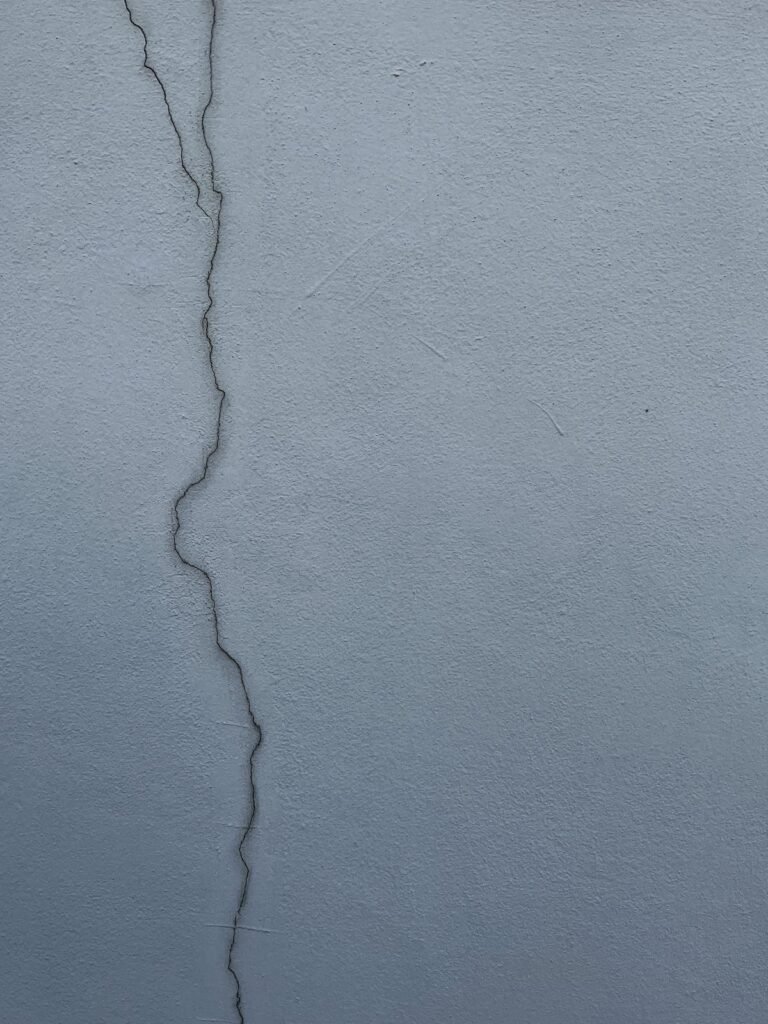
Finding a crack in your foundation can be frightening, especially in Little Elm, where shifting soil puts real stress on slab homes. The good news is that not every crack signals danger, and the right response depends on what the crack looks like, where it sits, and whether it is changing. This guide helps you read common crack types, spot the warning signs that need urgent action, and decide what to do next without guessing or covering the problem up.
Start by documenting the crack clearly
Before you judge a crack, record it properly. Photograph it in good light with a coin beside it for scale, and note the room, location, and direction it runs. Mark the ends lightly with tape so you can check later whether it has grown. Recheck after dry spells and after rain, because soil movement can make cracks open and close slightly. A clear record helps a specialist judge whether the crack is stable or active.
Read hairline cracks with calm, not panic
Fine, hairline cracks are common as concrete cures and a home settles, and a single fine crack with no other symptoms often calls for monitoring rather than urgent repair. Document it, recheck it at intervals, and watch for changes in width, length, or branching. Look for sticking doors, sloping floors, or dampness nearby, because a hairline crack plus other symptoms deserves closer attention. Do not fill a crack and forget it, because filling hides the change that would show whether the problem is growing.
Watch vertical cracks for movement and water
Vertical cracks run up and down a wall or across a floor, and often relate to settling or shrinkage. Your action depends on stability, water entry, and whether one side sits higher. Feel for a step or offset, check for dampness, and note whether nearby doors stick. A stable vertical crack with no water and no offset usually calls for monitoring and a professional opinion. One that grows, lets water in, or develops an offset needs prompt assessment.
Treat horizontal and stair step cracks as urgent checks
Horizontal cracks that run sideways, and stair step cracks that zigzag along mortar joints, deserve faster attention, because they can signal pressure against a wall or uneven movement across a foundation. Your action is to stop and get a professional assessment promptly, rather than monitoring alone. Photograph the full pattern, note whether the wall bows inward, and check for doors and windows that stick, floors that slope, and gaps around frames in the same area. Do not try to brace a wall yourself, and do not cover a horizontal or stair step crack with paint or filler as a fix. A specialist can judge whether the pattern is stable, whether monitoring is safe, or whether structural repair is needed.
Separate slab cracks from leak and drainage clues
A crack alone does not prove a plumbing leak, but cracks plus water clues need a different check. If a floor crack sits in a damp or warm patch, if your water bill rises with no routine change, or if your meter moves with everything off, ask about a hidden pipe leak as well as a foundation issue. Professional slab leak detection in Little Elm can check whether a supply line under the slab is contributing to dampness or soil movement near the crack. Detection typically costs $200 to $450. If a leak is confirmed, slab leak repair in Little Elm should follow the detection finding. Sorting leak from foundation movement first avoids fixing the crack while water keeps undermining the slab.
Know the warning signs that need urgent action
Act urgently when a crack grows quickly, when a wall bows or leans, when floors slope noticeably, when doors and windows suddenly stick across several rooms, when gaps open around frames, or when water pours through a crack. Also act urgently when a crack appears together with a damp floor patch, a warm spot, or a sewer smell, because combined symptoms can point to more than one problem. Move furniture away from a bulging wall, keep children away from a severely cracked area, and avoid loading that wall with heavy storage. Call a qualified foundation specialist promptly, and share your photos and notes so the assessment starts with clear evidence rather than a vague worry.
Ask the right questions before any repair
Before you approve foundation work, ask what caused the crack, whether it is active or stable, and what repair would address the cause rather than just the surface. Ask whether drainage, soil moisture, or a plumbing leak needs attention first, and get the plan in writing. Avoid a quote that only offers to fill the crack without explaining the cause. If rerouting or tunneling is proposed for a confirmed leak, typical ranges to plan around are rerouting $1,500 to $3,500 and tunneling $3,000 to $5,000, with spot repair $1,200 to $2,500 where a single section is the fault. For sewer related clues, sewer line repair in Little Elm may be the right path instead, so let the finding guide the fix.
| Crack pattern | Usual first response | Urgent warning sign |
|---|---|---|
| Fine hairline crack | Document and monitor | Rapid growth or branching |
| Vertical crack | Monitor and seek an opinion | Offset, water entry, or growth |
| Horizontal crack | Prompt professional assessment | Wall bowing or leaning |
| Stair step crack | Prompt professional assessment | Gaps, sloping floors, sticking doors |
Frequently asked questions
Do all foundation cracks mean my home is unsafe?
No. Fine, stable cracks are common and often need monitoring rather than urgent repair. Urgency rises with growth, bowing, offset, water entry, and combined symptoms such as sloping floors or sticking doors across several rooms.
Can I just fill a foundation crack myself?
Filling alone is not a diagnosis. It can hide growth and water entry, which are the very signs that show whether a crack is active. Document the crack, monitor it, and get a professional opinion before treating filling as a fix.
Could a slab leak cause a foundation crack?
A leak under a slab can contribute to soil and moisture changes that stress concrete, so water clues deserve a leak check alongside a foundation assessment. Detection first prevents a crack repair from masking an ongoing leak.
What should I bring to a foundation assessment?
Bring dated photos with scale, notes on where each crack sits and which direction it runs, any change you noticed after rain or dry spells, and notes on doors, floors, dampness, and water bills. Clear evidence leads to a clearer plan.
Get your crack read before you decide
If a crack in your Little Elm home is growing, letting in water, or appearing with other warning signs, do not wait and do not cover it up. Call +1 (972) 472-8573 or contact ElmLeak to discuss your clues and book the right check.
Pingback: Foundation Footing Repair: Signs, Causes, and Repair Methods
Pingback: Foundation Hairline Crack: Is It Serious and What Should You Do?
Pingback: Exterior Foundation Crack: What It Means and What to Do Next